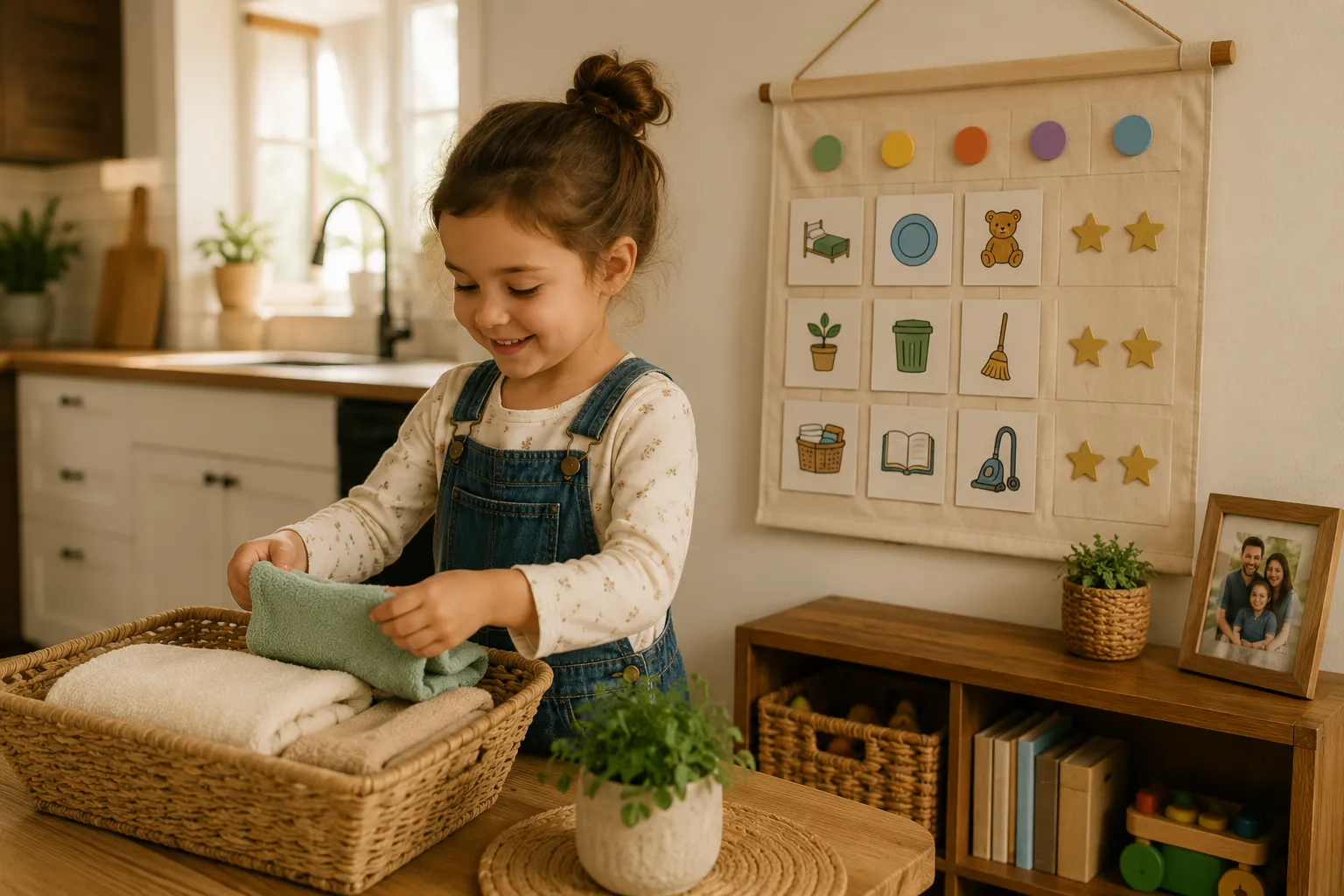
The right easy chores for children can change how a family handles daily routines. Children feel capable when they finish a task that truly fits their age. Parents feel less pressure when help becomes part of normal life. The key is choosing work that feels clear, safe, and meaningful. Chores should not overwhelm a child. They should give practice in responsibility, cooperation, and pride. Helping Hands: Making Chores Fun and Easy for Kids helps parents shape that practice with care. It supports teaching kids responsibility in a practical way. Small tasks can build strong habits. They also make children feel trusted in visible, everyday ways.
Small wins teach children that they can contribute. A toddler can place soft toys in a basket. A preschooler can carry napkins to the table. A young child can sort socks by color. These tasks look simple to adults, yet they build confidence quickly. Use age appropriate chores to keep expectations realistic. Add positive chore motivation when a child hesitates or loses focus. Praise the start, not only the finish. Children repeat behaviors that feel noticed. A small win today can become a stronger habit next month.
Matching tasks to age prevents frustration for everyone. Younger children need jobs with clear beginnings and endings. Older children can handle chores with more steps. A seven year old may wipe counters after snacks. A ten year old may pack lunch items or unload safe dishes. Build from household tasks for kids that already happen every day. Then use family chore routine tips to place those tasks at predictable times. Children do better when they know what comes next. Routine removes surprise. Predictability makes cooperation easier.
Children often resist chores because the instructions feel too vague. Clean your room can mean too many things at once. Try smaller directions instead. Put books on the shelf. Place laundry in the hamper. Move blocks into the red bin. A visual chore chart can turn those steps into something children can follow independently. A chore checklist for kids also helps older children track progress. Keep pictures or words at eye level. Clear instructions reduce repeated reminders. They also make success easier to recognize.
Tasks become easier when they happen at the same time each day. After breakfast, children can clear plates. Before screen time, they can reset toys. After bath time, they can place towels in the hamper. A steady daily chore routine helps children understand the rhythm of the home. Some families add a gentle reward system for chores while new habits form. Keep the reward small and connected to effort. Helping Hands: Making Chores Fun and Easy for Kids can guide parents toward routines that feel encouraging instead of strict.
Children need room to practice imperfectly. A folded towel may look uneven. A wiped table may still have crumbs. A toy bin may need one more pass. Respond with patience whenever safety is not an issue. Praise effort first, then teach the improvement. This encourages independent habits for children because children do not fear small mistakes. It also strengthens family teamwork at home by showing that everyone learns. For chart planning, read the home chart guide. For play-based support, visit the motivation article.
Parents can make practice easier by preparing spaces before tasks begin. Put low hooks near the entry. Use open bins for toys. Keep cleaning cloths in a safe drawer. Store pet supplies where older children can reach them. Simple storage reduces confusion and wasted time. A practical parenting guide for chores can help families choose tools that fit real routines. Avoid changing every system at once. Improve one area, then watch how children respond. Practical design helps responsibility feel natural. It also makes helping feel less like an interruption.
Ownership grows when children understand why their work matters. A made bed makes the room calmer. A cleared table prepares space for the next meal. A filled pet bowl cares for another living creature. These connections make chores meaningful. Return to Helping Hands: Making Chores Fun and Easy for Kids when your family needs a fresh plan. Keep expectations kind and specific. Let skills grow slowly. Children become more responsible when adults trust them with real contribution. The best chores are simple, visible, and useful. They help children feel needed at home. When children see the impact of their work, they are more likely to repeat it with less prompting and more confidence.


Leave a comment
You must be logged in to post a comment.