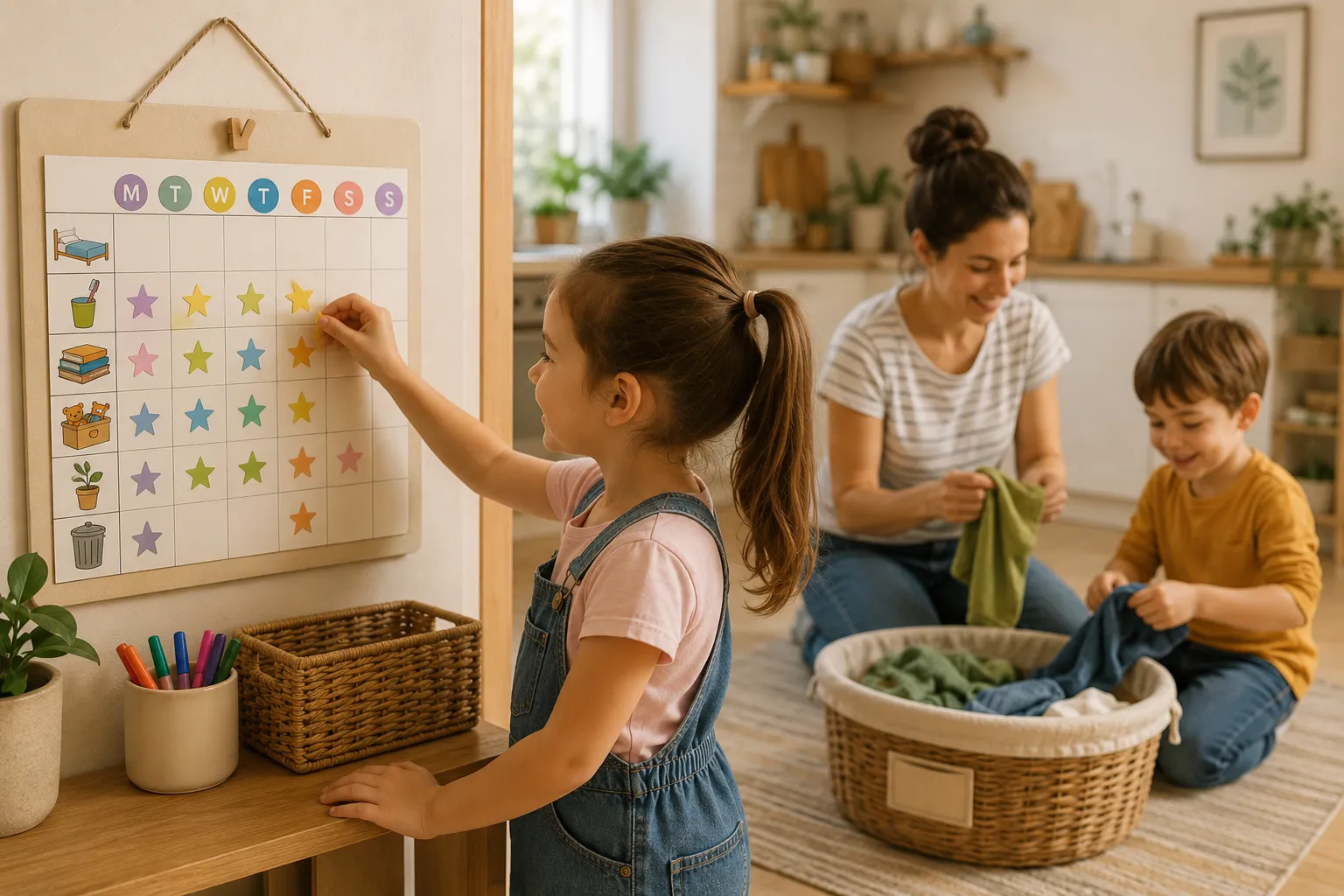
Parents often hear that making chores fun for kids means turning every task into a game. Fun helps, but structure matters just as much. Children need to understand what to do, when to do it, and why it matters. A playful tone can reduce resistance while a clear routine protects consistency. This balance helps families avoid bargaining over every small job. Helping Hands: Making Chores Fun and Easy for Kids gives parents a practical way to shape that balance. It supports teaching kids responsibility without making home routines feel heavy. Children can help. They just need the right invitation.
Children respond to the feeling around a task before they respond to instructions. A tense parent can make a simple job feel difficult. A warm voice can make the same job feel manageable. Start with connection, then give direction. Use positive chore motivation when children hesitate. Notice their effort, even when the result needs fixing. Say exactly what worked. Then guide the next step calmly. This approach keeps chores from becoming a daily argument. It also helps children associate helping with belonging. Emotional safety makes cooperation easier and more natural.
Choice gives children a sense of control, especially when the task is not optional. Offer two jobs that both help the family. Ask whether your child wants to clear plates or wipe the table. Let a younger child choose between matching socks or putting books away. Keep options based on age appropriate chores so success feels possible. A simple chore checklist for kids can show the choices clearly. Children enjoy having a voice. Parents still keep the routine moving. Small choices reduce pushback because the child participates in the plan.
Games work best when they stay short, friendly, and realistic. Try a two minute tidy race. Play one upbeat song during pickup. Ask children to rescue five toys from the floor. Use a visual chore chart to show progress after each round. Some families add a gentle reward system for chores when a new habit needs momentum. Rewards should support effort, not replace it. Stickers, choosing a story, or selecting dinner music can feel special. Helping Hands: Making Chores Fun and Easy for Kids can help parents keep playfulness simple and sustainable.
Praise should describe what the child did, not only the final result. Say that the blocks went back in the bin. Mention that the napkins reached every place setting. Point out when your child started without another reminder. This builds independent habits for children because effort becomes visible. It also reinforces family teamwork at home in everyday language. Avoid praise that sounds surprised by basic competence. Children notice that tone. Instead, speak with confidence. They are learning useful skills. Your words should help them believe that.
Busy days can undo a routine when expectations become too large. Keep a minimum version for tired evenings. One basket reset can protect the habit. One table wipe can still count. A flexible daily chore routine helps parents stay consistent without becoming rigid. Use family chore routine tips to decide which tasks matter most. Skip perfection during school events, travel, or illness. Resume the next day without guilt. For chart support, visit the visual planning article. For task matching, read the age-friendly chore article.
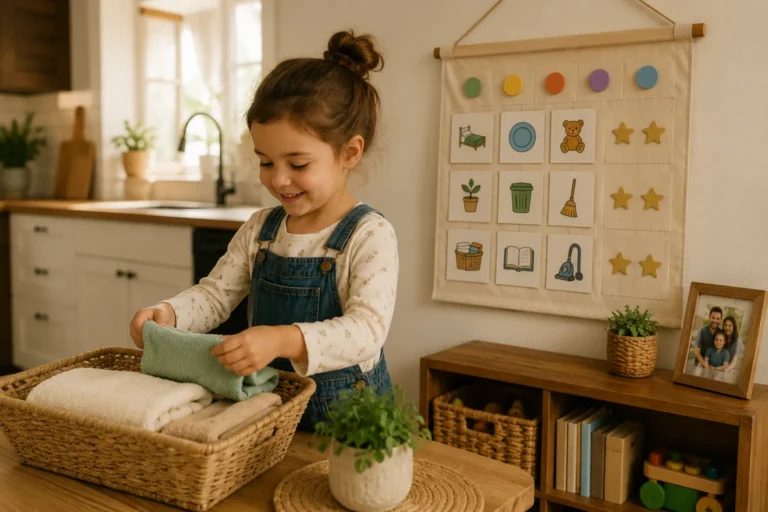
Parents can also prepare the environment before asking for help. Keep child-sized tools within reach. Store towels, bins, and small brooms where children can use them safely. Reduce steps whenever possible. A child who must search for supplies may lose focus quickly. Clear storage supports household tasks for kids because the work becomes easier to start. Model the first round when introducing something new. Then step back while your child practices. Mistakes will happen. Calm repetition matters more than flawless performance. The home becomes a classroom for practical confidence.
Long-term success comes from repetition that feels fair and encouraging. Children should see adults helping too. They should understand that chores protect comfort, meals, clothing, and shared spaces. A thoughtful parenting guide for chores can help families adjust tasks as children grow. Return to Helping Hands: Making Chores Fun and Easy for Kids when motivation needs fresh ideas. Keep the routine visible. Keep expectations kind. Keep celebrating progress. Over time, children learn that helping is not an interruption. It is part of belonging to a family. That identity makes future routines easier because children begin seeing themselves as capable helpers.


Leave a comment
You must be logged in to post a comment.