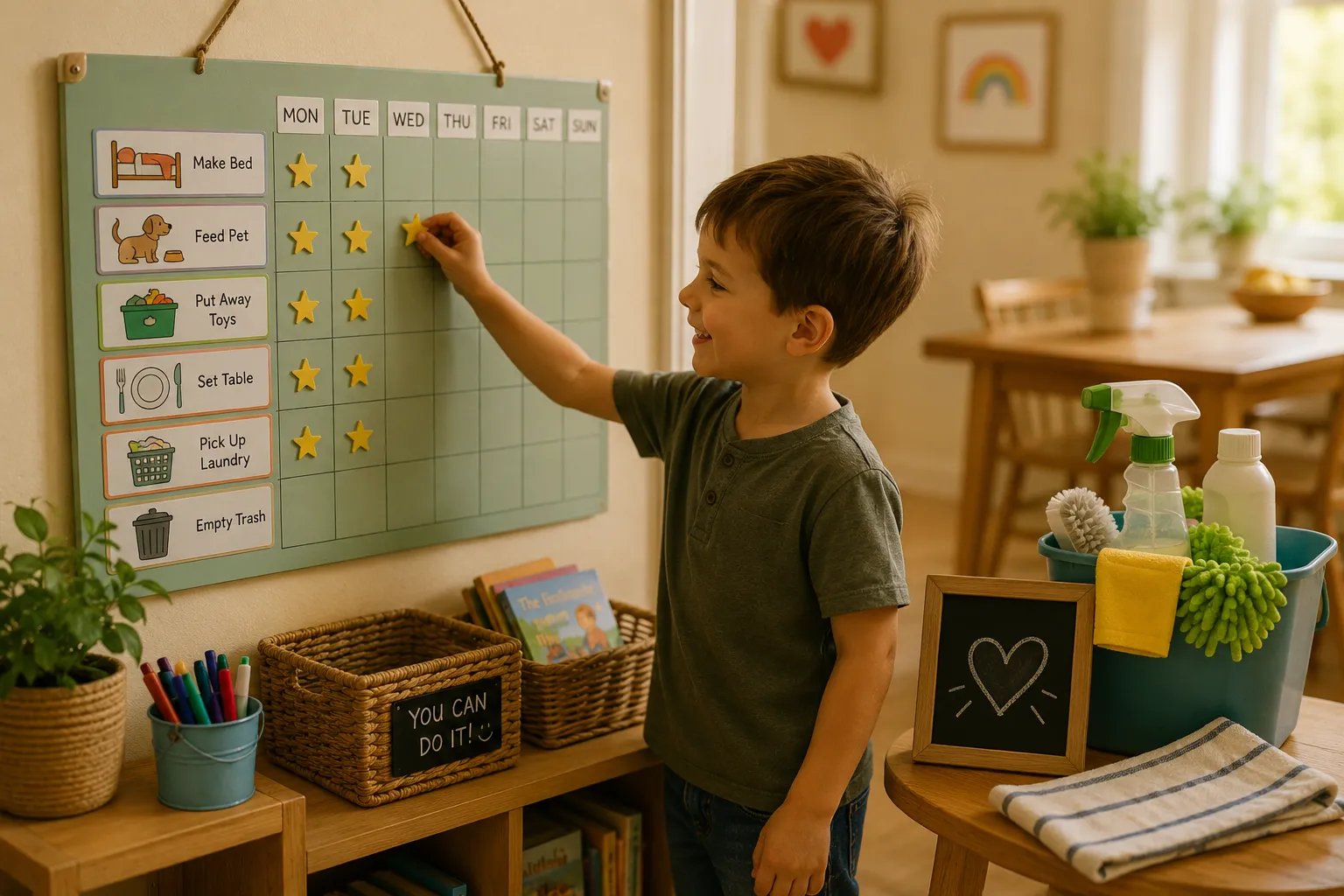
The best kids chore chart ideas do more than assign tasks. They give children a clear picture of how they contribute. A good chart reduces reminders, arguments, and last minute confusion. It also helps parents create routines that feel calm instead of constant. When children see progress, they understand effort in a practical way. This is why Helping Hands: Making Chores Fun and Easy for Kids can be a useful parent resource. It supports teaching kids responsibility through small, repeatable steps. The goal is not perfection. The goal is shared effort. A chart should make home life easier for everyone.
Before drawing boxes or printing templates, decide what the chart should solve. Some families need smoother mornings. Others need better cleanup after dinner. Many parents want fewer repeated instructions. Clear goals make the chart more useful from day one. Use family chore routine tips to connect tasks with real household needs. Then choose a visual chore chart that children can understand quickly. Younger kids may need pictures. Older kids can manage short written tasks. Keep the layout simple. A crowded chart becomes another chore. A focused chart becomes a helpful guide.
Children cooperate more easily when the task feels possible. Preschoolers can match socks, place napkins, or put toys in bins. Early elementary children can wipe tables, feed pets, or sort laundry. Older children can help with dishes, trash, and simple meal prep. Choose age appropriate chores before choosing rewards. This keeps expectations fair. It also protects confidence. A task that feels too hard invites resistance. A task that feels achievable builds pride. Use household tasks for kids as practice, not punishment. Small wins make bigger responsibilities feel natural later.
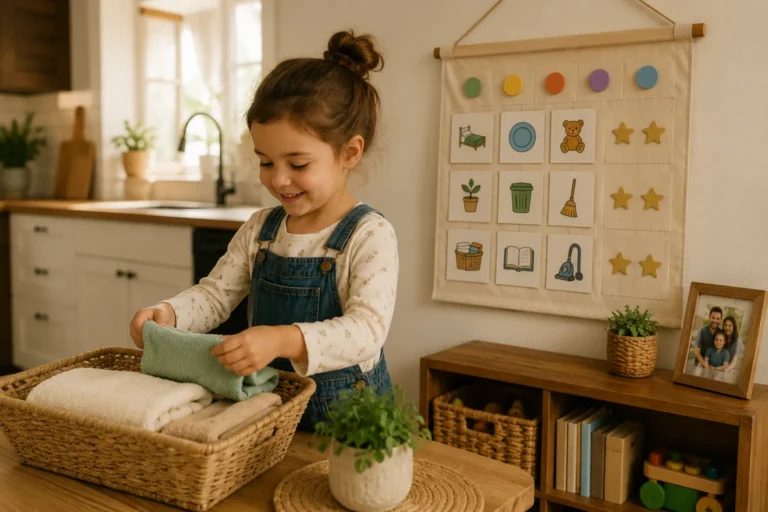
Placement matters because children forget what they cannot see. Put the chart near a family command center, breakfast table, or bedroom door. Use icons, magnets, stickers, or dry erase markers for quick updates. The system should invite action without needing a long explanation. A chore checklist for kids can work well when steps repeat daily. Pair it with a steady daily chore routine so children know when tasks happen. Morning tasks should stay brief. Evening tasks can include more cleanup. Visibility turns reminders into a shared reference point.
Motivation should feel encouraging rather than controlling. Praise effort before speed. Notice follow through before pointing out mistakes. Use positive chore motivation to help children connect work with contribution. Some families enjoy a small reward system for chores, especially when habits are new. Rewards do not need to be expensive. Extra reading time, choosing music, or picking a weekend breakfast can feel meaningful. Helping Hands: Making Chores Fun and Easy for Kids can help parents keep rewards balanced. The chart should celebrate growth. It should not create pressure.
A chore chart works best when children see adults participating too. Parents can model cleanup, reset shared spaces, and speak positively about helping. This builds family teamwork at home without long lectures. Children learn that every person has a role. They also learn that home care is not invisible work. Avoid using chores only after misbehavior. That makes helping feel like a penalty. Instead, connect tasks to comfort, meals, clean clothes, and calmer mornings. For more playful support, read the fun routine article. For task planning, visit the simple chore guide.
Parents also need a system they can maintain during busy weeks. Complicated charts often fail because adults cannot update them consistently. Choose materials that match your real life. Laminated paper, magnets, or a simple clipboard can all work. Let children mark completion when they finish. That small action builds ownership. Keep corrections gentle and specific. Say what needs fixing, then show the next step. Avoid restarting the whole routine after one missed day. A calm reset teaches resilience. The chart becomes stronger when everyone can return to it easily. That reliability matters more than decoration. It also keeps parents encouraged.
Review the chart every few weeks so it grows with your family. Remove tasks that feel too easy. Break down tasks that still cause confusion. Add new choices when children want more independence. The best routines create independent habits for children through repetition and trust. A practical parenting guide for chores can make those adjustments easier. Return to Helping Hands: Making Chores Fun and Easy for Kids when motivation needs a reset. Your chart should stay flexible. Children change quickly. A strong system changes with them.


Leave a comment
You must be logged in to post a comment.